
Structural Audit of Buildings: What Every Property Owner Should Know
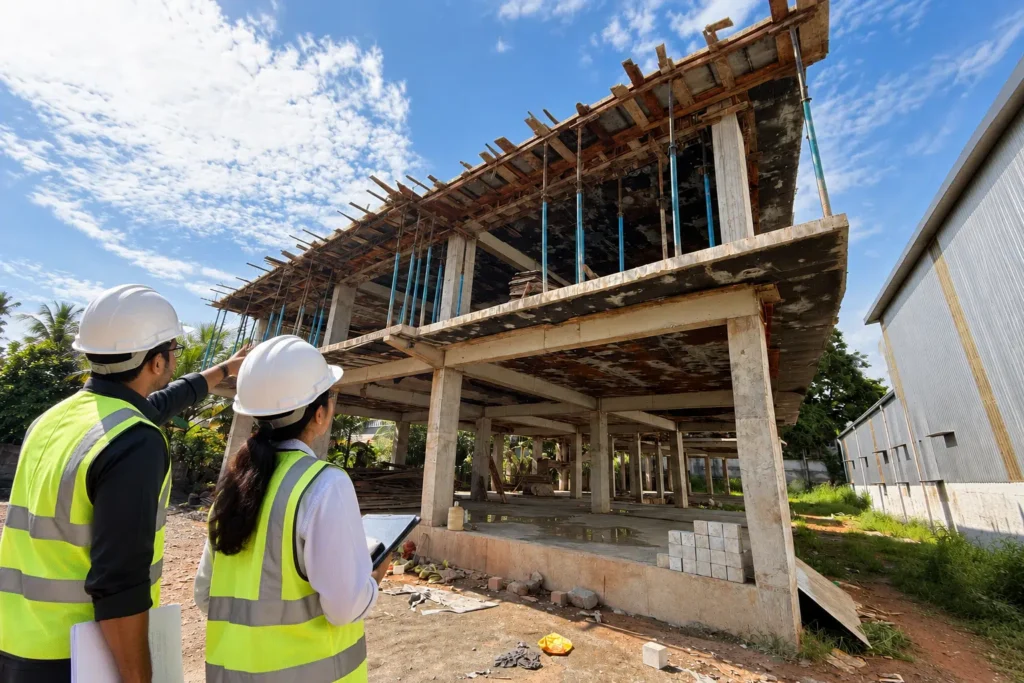
Most structural problems don’t show up overnight. They creep in slowly – a small crack that gets a little wider each year, a door that starts sticking for no obvious reason, a damp patch that keeps returning no matter how many times it’s repainted. To most owners, these look like ordinary aging. Sometimes that’s exactly what they are. Other times, they’re the visible edge of something more serious happening underneath – corroding reinforcement, a shifting foundation, or load stress that’s been quietly building for years.
The problem is, from the outside, both scenarios can look almost the same. There’s no way to tell them apart just by looking. That’s where a structural audit of buildings comes in. It replaces guesswork with an actual engineering assessment of what’s going on inside the walls, columns, and foundation – and whether it needs attention now or can be monitored over time.
For buildings older than 15-20 years, or ones that have shown recurring signs of wear, getting this checked early is usually the difference between a small repair job and a much bigger structural intervention down the line.
What Is a Structural Audit of Buildings?
A structural audit is a detailed engineering evaluation of a building’s safety, stability, and remaining service life. Structural engineers examine the foundation, columns, beams, slabs, and load-bearing walls to spot weaknesses that wouldn’t be obvious to someone without technical training.
It’s different from a general maintenance check. A maintenance visit looks at what’s visible on the surface. A structural audit goes further – it’s built to answer three specific questions: Is the building safe to use right now? Which parts need repair or reinforcement? And how much longer can the structure hold up without major work?
Why This Matters More for Older Buildings
Concrete doesn’t stay at full strength forever. Reinforcement bars corrode over time, waterproofing wears thin, and constant exposure to monsoon conditions – a real factor in a place like Kerala – speeds up the damage.
Here’s the part people don’t always expect: a building can look completely fine on the outside while the reinforcement inside has already lost a significant chunk of its strength to corrosion. That’s exactly why structural inspection becomes more important as a building gets older, not less.
Warning Signs Worth Taking Seriously
A few visual cues tend to show up before bigger structural issues surface:
- Cracks wider than 3mm, especially diagonal ones near openings or load-bearing walls
- Floors that feel uneven or slightly bouncy underfoot
- Concrete spalling – surface layers flaking off to reveal rusted rebar
- Water seepage that keeps coming back after being patched up
- Doors and windows that jam or don’t align properly anymore
- Columns that appear to be tilting or leaning
- Rust stains bleeding through ceiling or beam paint
One of these on its own might not mean much. But when several show up together, or get worse over a short period, that’s usually a good reason to bring in an engineer rather than wait it out.
How the Structural Audit Process Actually Works
A structural audit isn’t a quick once-over. It typically moves through a few defined stages.
1. Preliminary Visual Investigation
The engineer walks through the entire property, noting every visible sign of distress – cracks, seepage, corrosion, sagging – and mapping out exactly where each one occurs. This becomes the starting point for the more technical work that follows.
2. Non-Destructive Testing (NDT)
This is where testing tools come in without any damage to the structure itself. A rebound hammer test estimates concrete strength. Ultrasonic pulse velocity testing checks concrete density and picks up internal voids. Cover meters locate embedded reinforcement and measure how deep it sits.
3. Checking for Reinforcement Corrosion
Corroded steel inside concrete is one of the more serious hidden risks in older structures. Half-cell potential testing is commonly used here – it evaluates the likelihood of corrosion in embedded rebar without breaking open the concrete to check manually.
4. Structural Analysis and Load Assessment
With all this data in hand, engineers work out whether the structure can still handle its intended loads safely. This step also flags whether changes made over the years – an extra floor, a converted room, heavier usage than originally planned – have pushed the building past its original design limits.
5. The Final Report
The audit ends with a report that spells out where the problems are, how serious each one is, what’s likely causing it, and what needs to happen next – whether that’s ongoing monitoring, targeted repair, structural retrofitting, or, in rare cases, something more drastic.
What Drives the Cost of a Structural Inspection
This is usually the first thing owners want to know, and the honest answer is: it depends on a handful of real variables.
- Size and complexity of the building – a small independent house costs far less to assess than a multi-storey commercial structure
- How much visible damage there already is – more distress generally means more testing points and more time spent analyzing
- Type of testing needed – a basic visual check costs less than a full round of NDT, corrosion testing, and lab analysis
- How accessible the site is – tight spaces, upper floors, or restricted areas add to inspection time
- Age and construction type – older buildings, or ones with unconventional structural systems, usually need deeper investigation
- Depth of the report itself – a simple condition report is cheaper than a full audit with calculations and retrofitting recommendations
One thing worth keeping in mind: the cost of the audit itself is almost always smaller than the cost of a problem left unchecked. Catching a foundation issue or reinforcement corrosion early usually costs a fraction of what a full-scale retrofit – or an emergency repair after something actually fails – would run to.
When You Should Actually Get a Structural Audit Done
This isn’t only for buildings that look visibly damaged. It’s worth considering if any of these apply:
- The building is over 15-20 years old and has never had a formal structural assessment
- You’re buying an older property and want a clear picture of what you’re getting into
- Cracks, seepage, or unevenness keep showing up despite repairs
- You’re planning a renovation, an additional floor, or a change in how the space is used
- The area has recently seen flooding, heavy rainfall, or minor seismic activity
- You manage a rental or commercial property, where structural safety is a direct responsibility toward the people using the space
If even one of these sounds familiar, it’s usually not worth putting off. Structural issues tend to get worse quietly, long before they become obvious.
Why It's Worth Getting Ahead of This
The real value of a structural audit isn’t just spotting problems – it’s replacing uncertainty with an actual answer. Instead of wondering every monsoon whether that crack has grown, you get a proper engineering assessment that separates cosmetic wear from genuine structural concern, along with a clear plan for what to do about it.
This matters even more in places like Kochi and across Kerala, where humidity, coastal exposure, and heavy monsoons wear down concrete structures faster than in drier climates. In that context, a structural audit isn’t really optional – it’s practical risk management.
Working with an experienced Structural Engineering Company in Kochi makes sure the audit is done using the right equipment, the right technical expertise, and recommendations that are actually usable rather than just theoretical.
Structural Audit and Inspection Services at G Factree
G Factree is a Kochi-based architecture and structural engineering firm, founded in 2016. The team follows an “Engineered Design” approach, where architects and structural engineers work together on a project instead of in separate stages. That matters for a structural audit of buildings, because the person assessing your building understands both how it was designed and how it behaves under load.
As a Structural Engineering Company in Kochi, G Factree carries out structural inspections and audits for residential, commercial, and institutional buildings. Each assessment covers the condition of the foundation, columns, beams, and slabs, and ends with a clear report that sets out what needs repair, what needs monitoring, and what can safely be left alone.
If you own an older building, or have noticed recurring cracks, seepage, or other signs of distress, you can get in touch with the G Factree team to discuss a structural assessment for your property.
Final Word
A structural audit of buildings gives property owners something most of them don’t otherwise have – a clear, engineering-backed read on how sound their building really is. Not a guess, not an assumption based on how things look from outside, but an actual assessment of what’s happening inside the structure and what it needs going forward.
If a building has been showing early signs of wear, or simply hasn’t been checked in years, getting a structural inspection done sooner rather than later tends to save both money and stress in the long run.
FAQ Section
1. How often should a building undergo a structural audit?
Generally every 5 years for buildings over 15 years old, or sooner if visible signs like cracking or seepage show up.
2. Is a structural audit of buildings only needed for old or damaged buildings?
Not necessarily. Newer buildings undergoing renovation, floor additions, or a change in usage also need an audit to confirm the structure can handle the new load.
3. How is a structural audit of buildings different from a regular building inspection?
A regular inspection is mostly visual. A structural audit involves actual engineering tests – like non-destructive testing and corrosion assessment – to evaluate real structural strength.
4. Can a structural audit tell you how long a building will last?
Not with an exact number, but it gives a reasonable estimate of remaining service life based on the current condition of materials, corrosion levels, and load capacity.
5. Who should be hired to carry out a structural inspection of buildings?
A qualified structural engineer or an experienced firm that understands local construction methods and the specific environmental wear common to the region.